The best board games for classrooms and family game nights make it easy to match the activity to players’ ages, group size, and learning goals. These picks range from preschool skill builders to classic strategy and logic games, so consider whether you want an active group game, a focused puzzle, or a reusable tabletop staple.
Quick Top Products
Learning Resources Sum Swamp Game
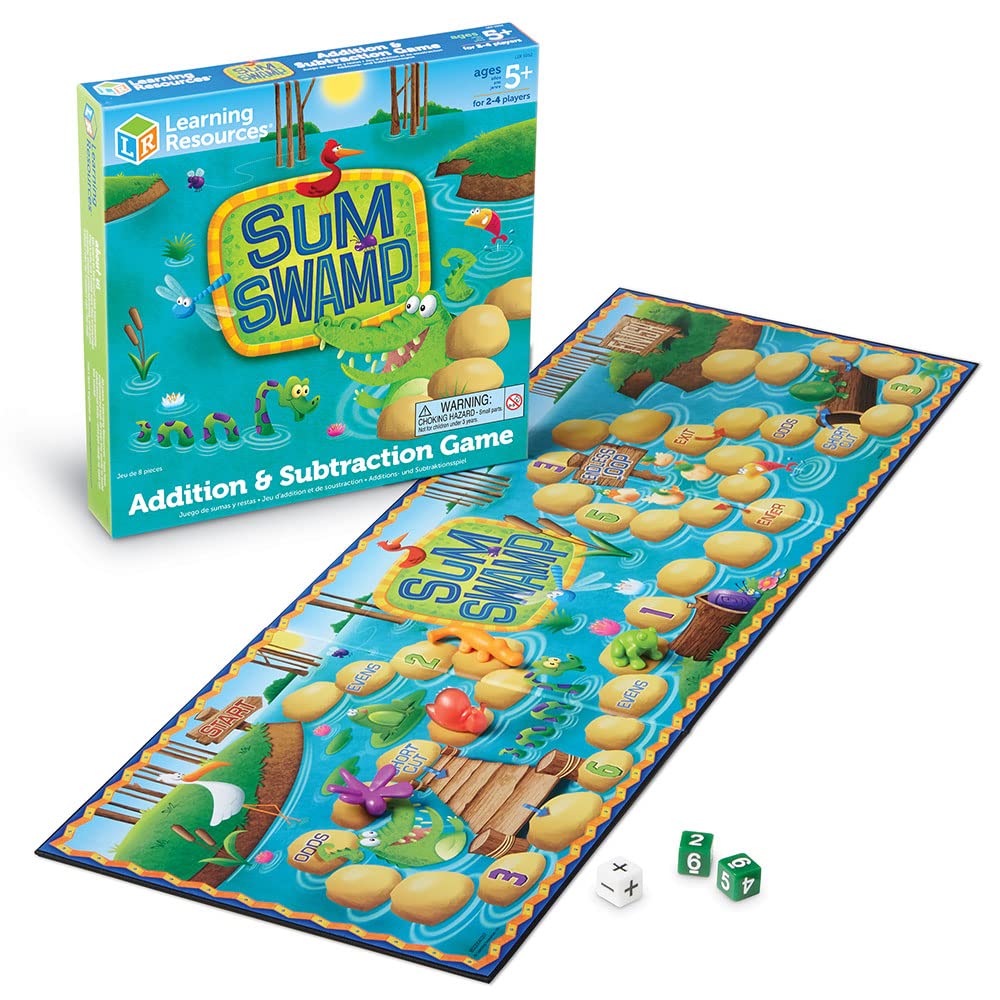
- Practices addition, subtraction, and even and odd numbers.
- Uses a sturdy board and colorful creature pieces.
- Designed for kindergarten and first-grade math practice.
Best For: Kindergarten and first-grade players practicing addition, subtraction, and number concepts through play.

Educational Insights The Sneaky, Snacky Squirrel Game
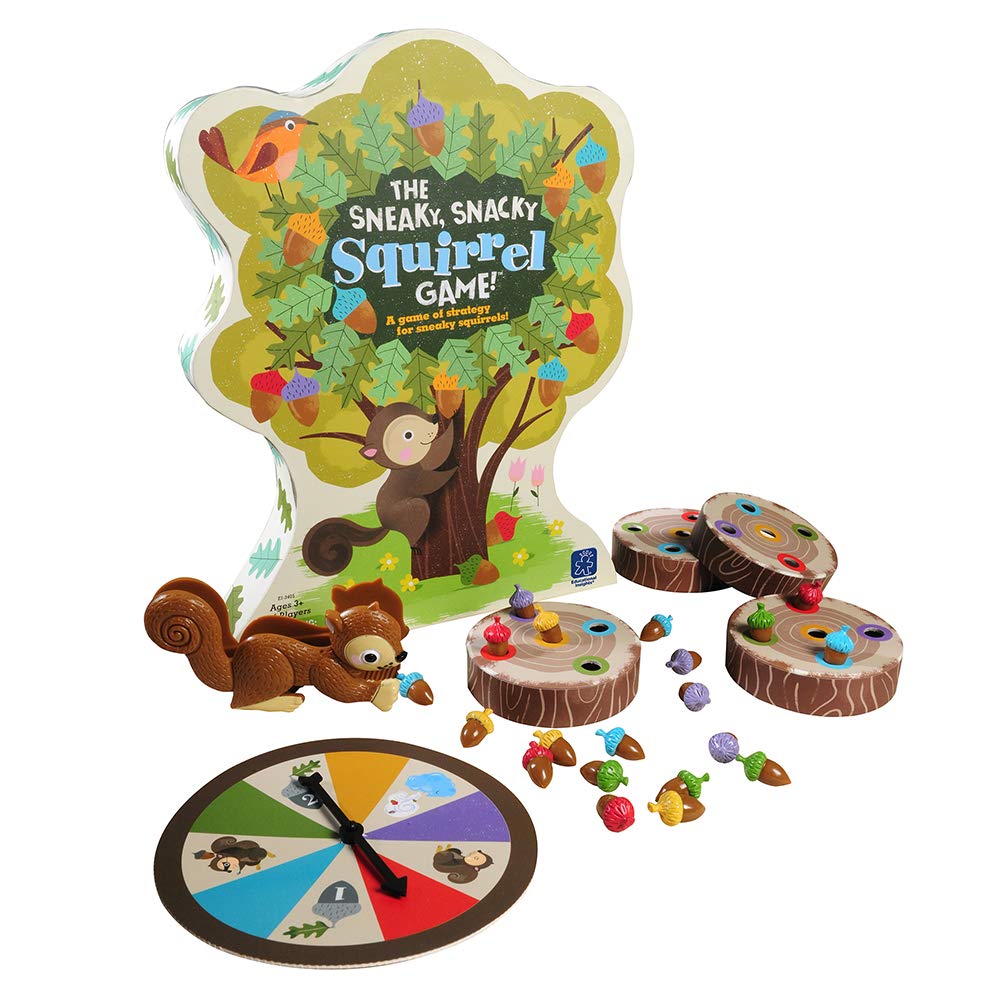
- Combines color learning, strategy, and hand-eye coordination.
- Uses a squirrel squeezer to collect matching acorns.
- For two to four players ages three and up.
Best For: Preschoolers ready to practice color matching, turn taking, and fine motor control in a simple group game.
Educational Insights Shelby’s Snack Shack
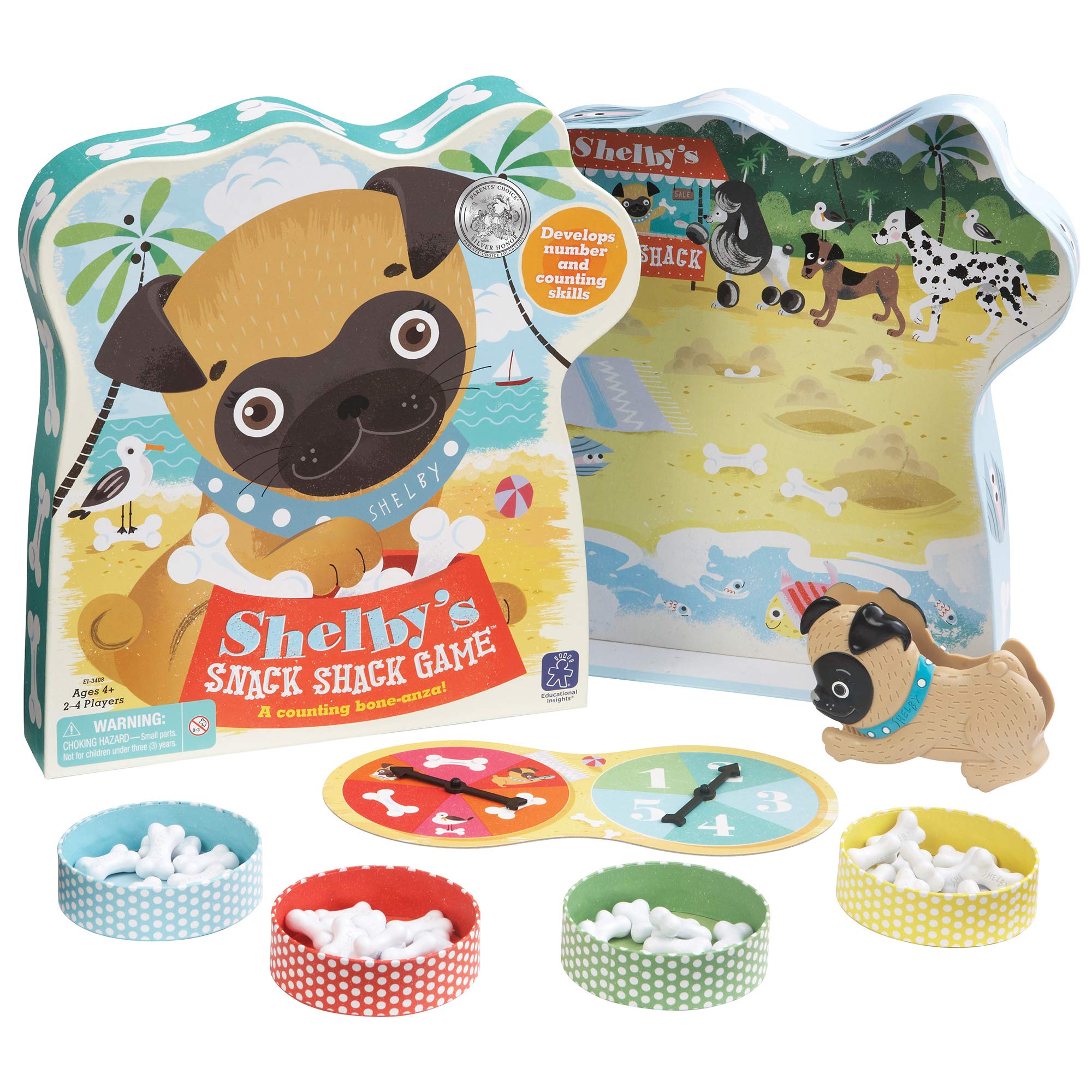
- Teaches numbers and counting through play.
- Includes a squeezer, forty bones, four bowls, and a double spinner.
- Supports two to four players.
Best For: Preschool players practicing counting and number recognition with a tactile collection game.
Educational Insights Raccoon Rumpus
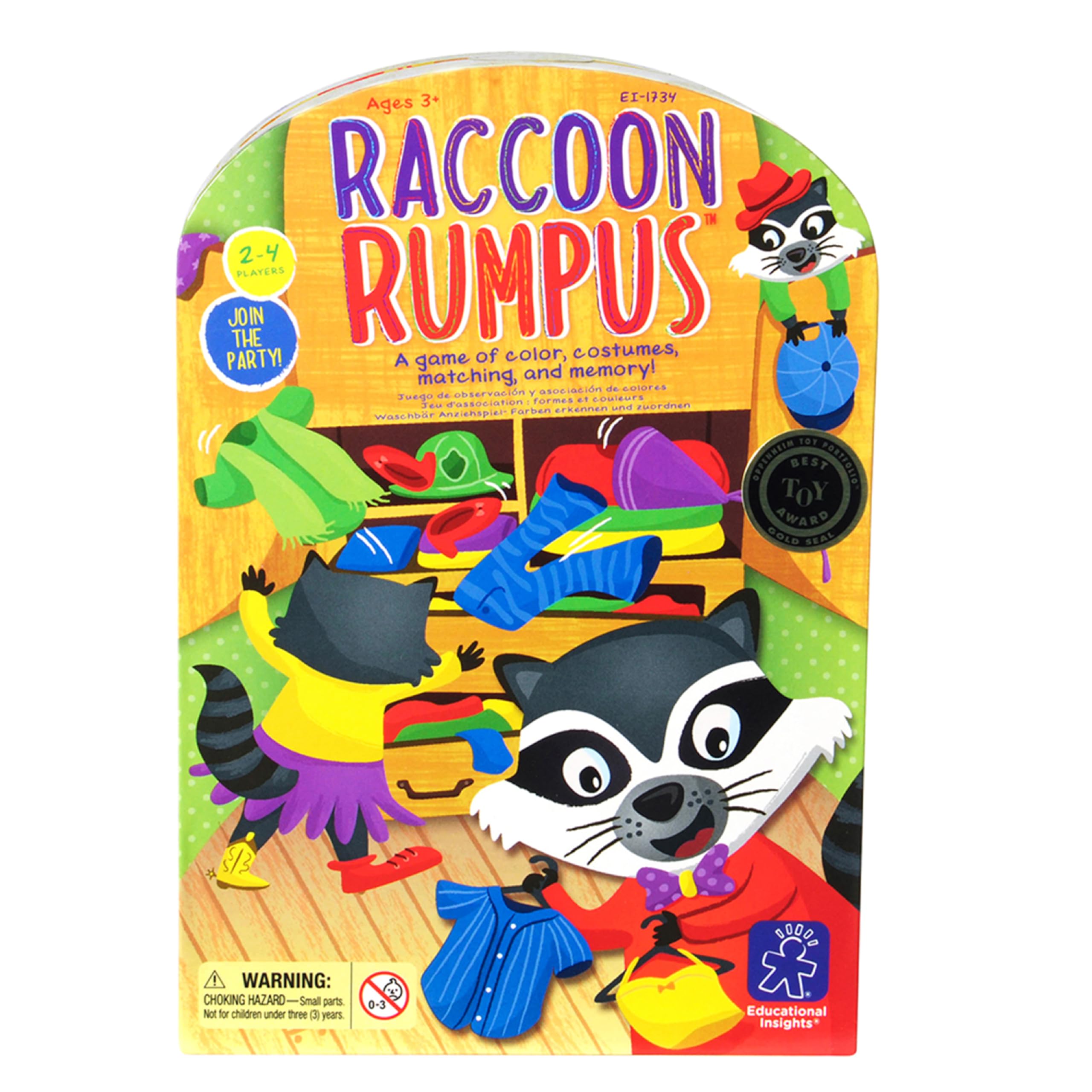
- Includes a matching game and a costume memory game.
- Uses jumbo color and costume dice.
- Designed for ages three and up.
Best For: Preschoolers who enjoy color matching and want both a quick matching game and a memory variation.
hand2mind Numberblocks Race to Pattern Palace!
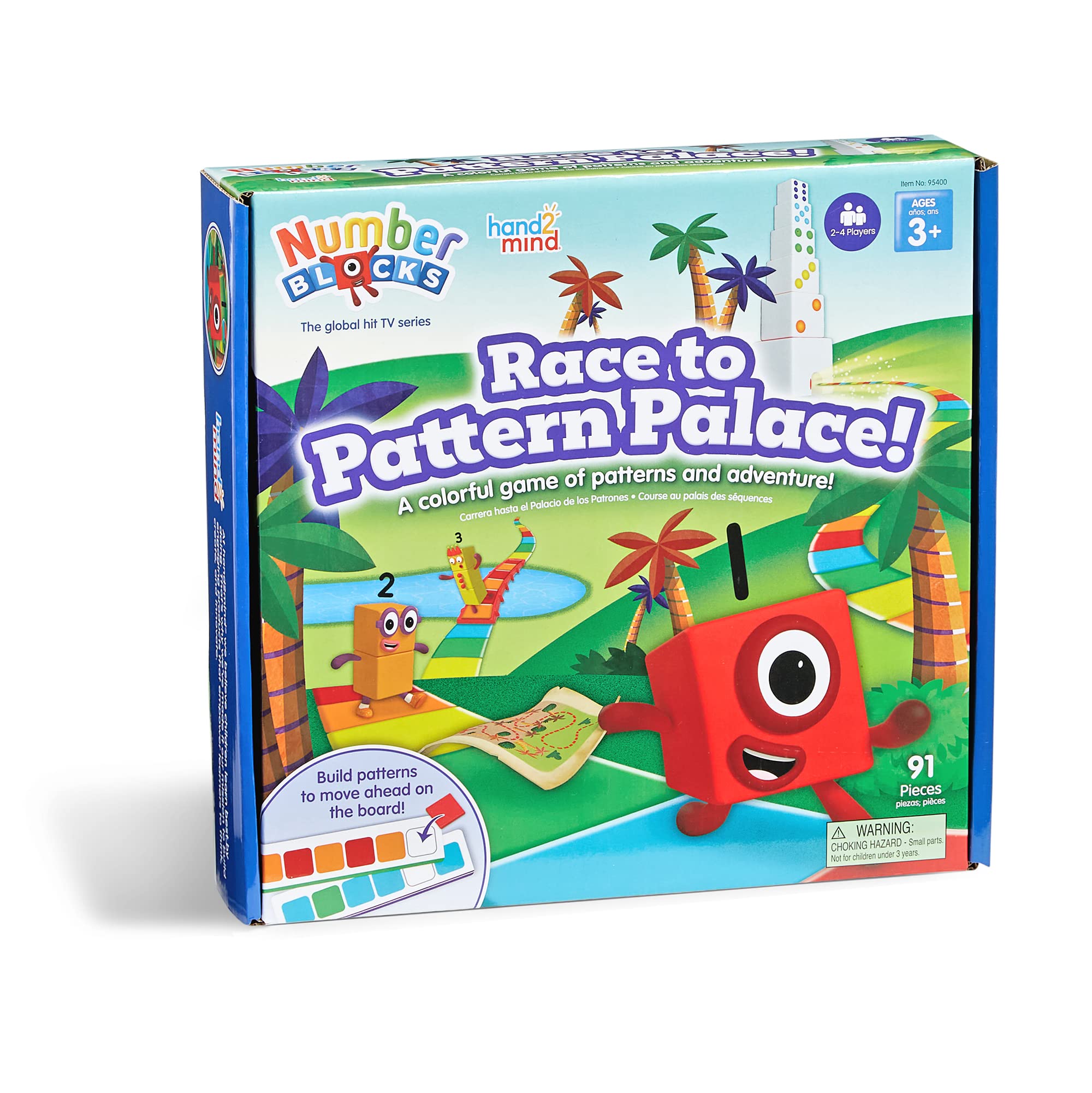
- Practices copying, extending, and creating patterns.
- Includes two levels of card play.
- For two to four players.
Best For: Numberblocks fans practicing patterns, colors, and counting with two levels of play.
Learning Resources Noodle Knockout
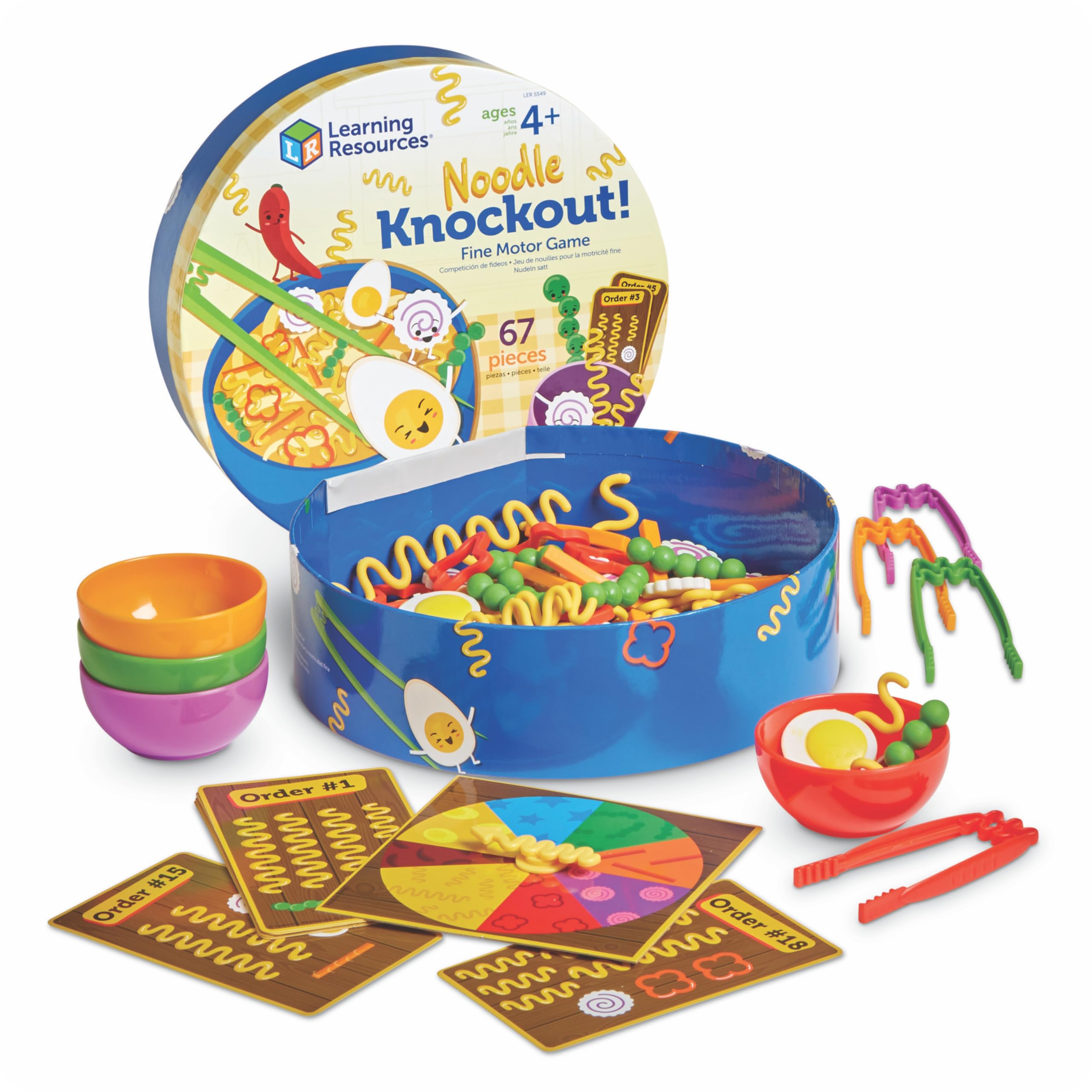
- Offers three game variations for ages four and up.
- Includes a 67-piece play set.
- Builds counting, color recognition, sorting, and turn taking.
Best For: Small groups of children ages four and up practicing color recognition, counting, and fine motor skills.
Educational Insights Pancake Pile-Up
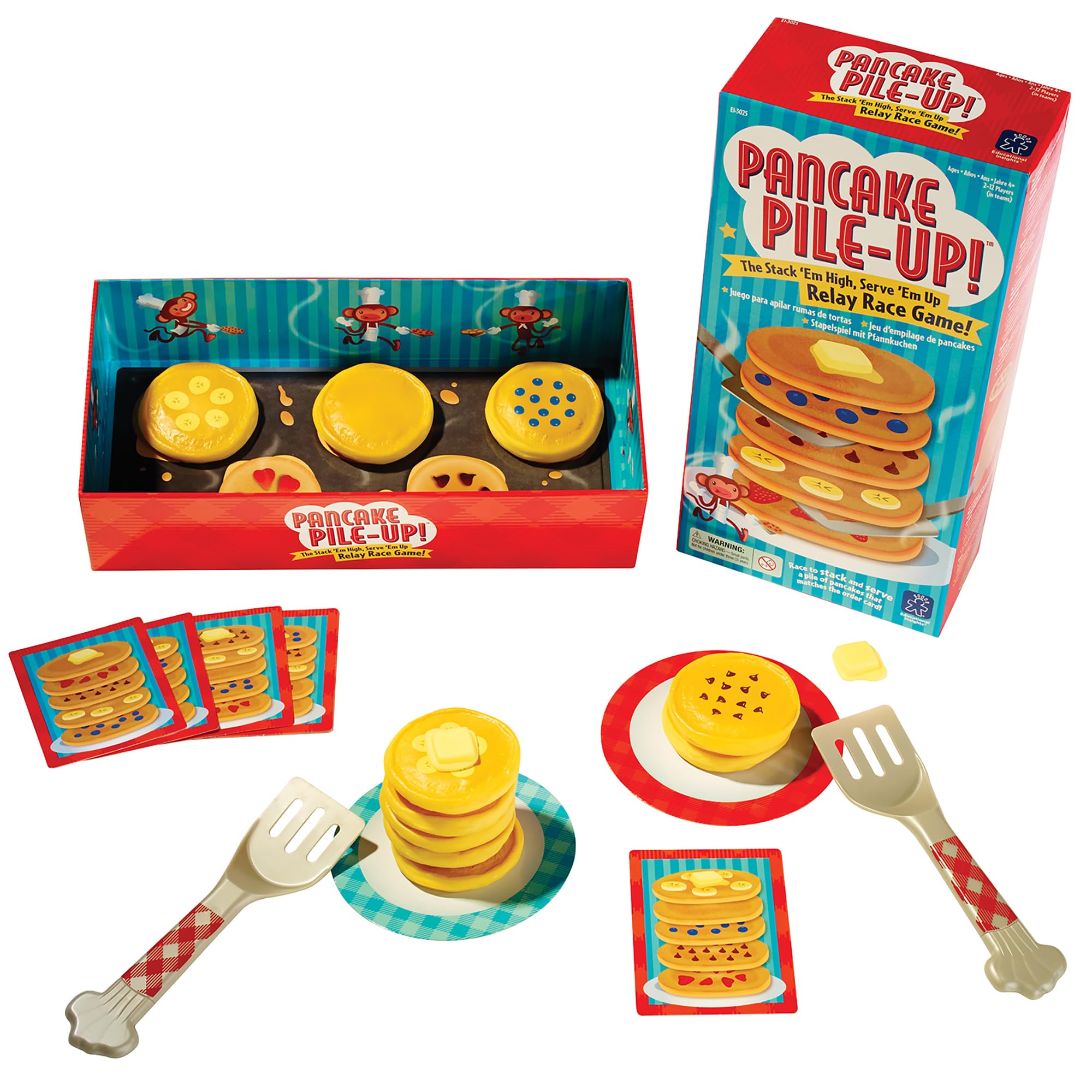
- Uses a team relay to complete pancake stacks.
- Supports two to twelve players ages four and up.
- Practices matching, patterning, and sequencing.
Best For: Children ages four and up who can play an active team relay while practicing matching and sequencing.
Educational Insights Kanoodle Head-to-Head
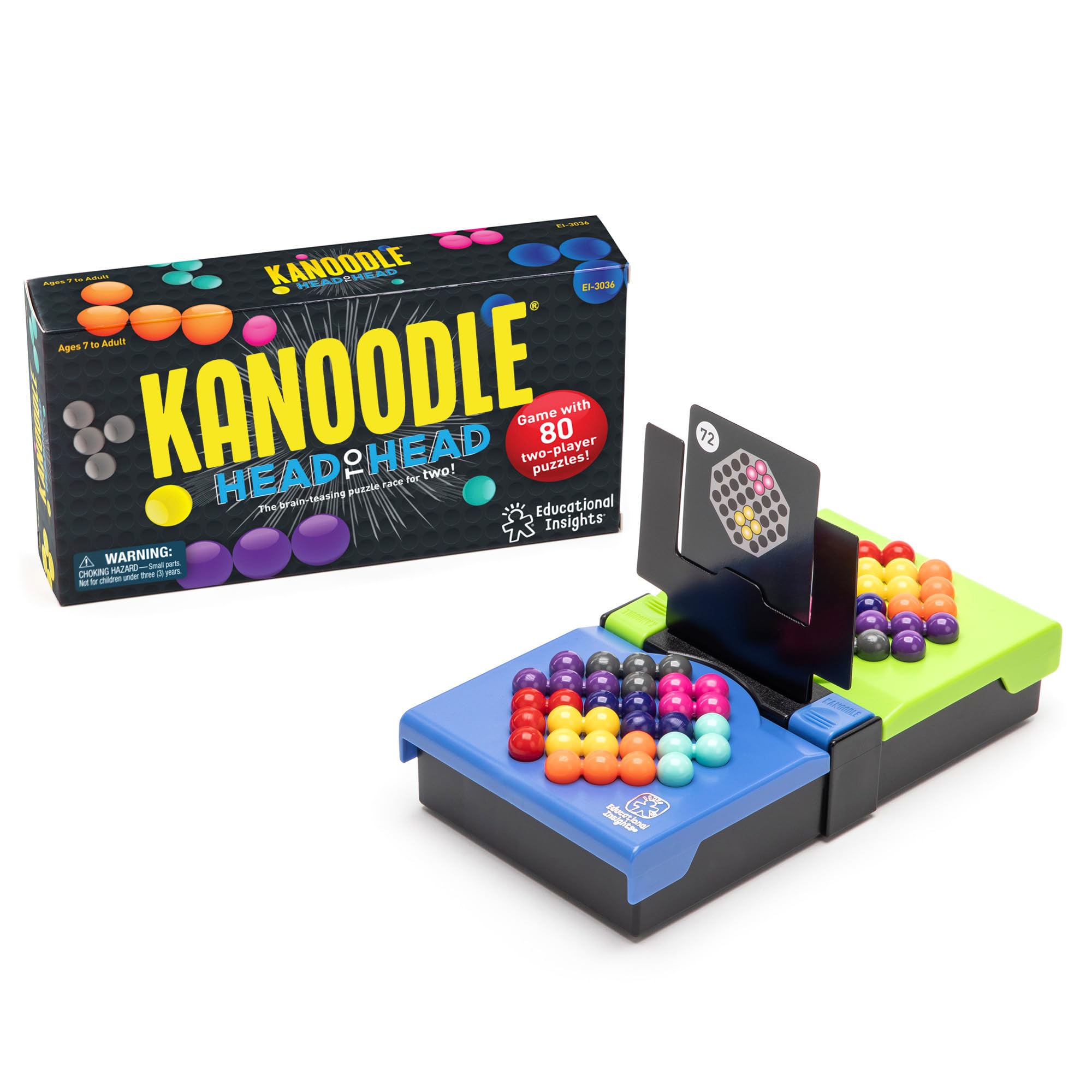
- Designed for two players ages seven and up.
- Includes forty double-sided challenge cards with eighty puzzles.
- A head-to-head puzzle race.
Best For: Two players ages seven and up who enjoy racing through spatial logic puzzles.
The Happy Puzzle Company The Genius Star
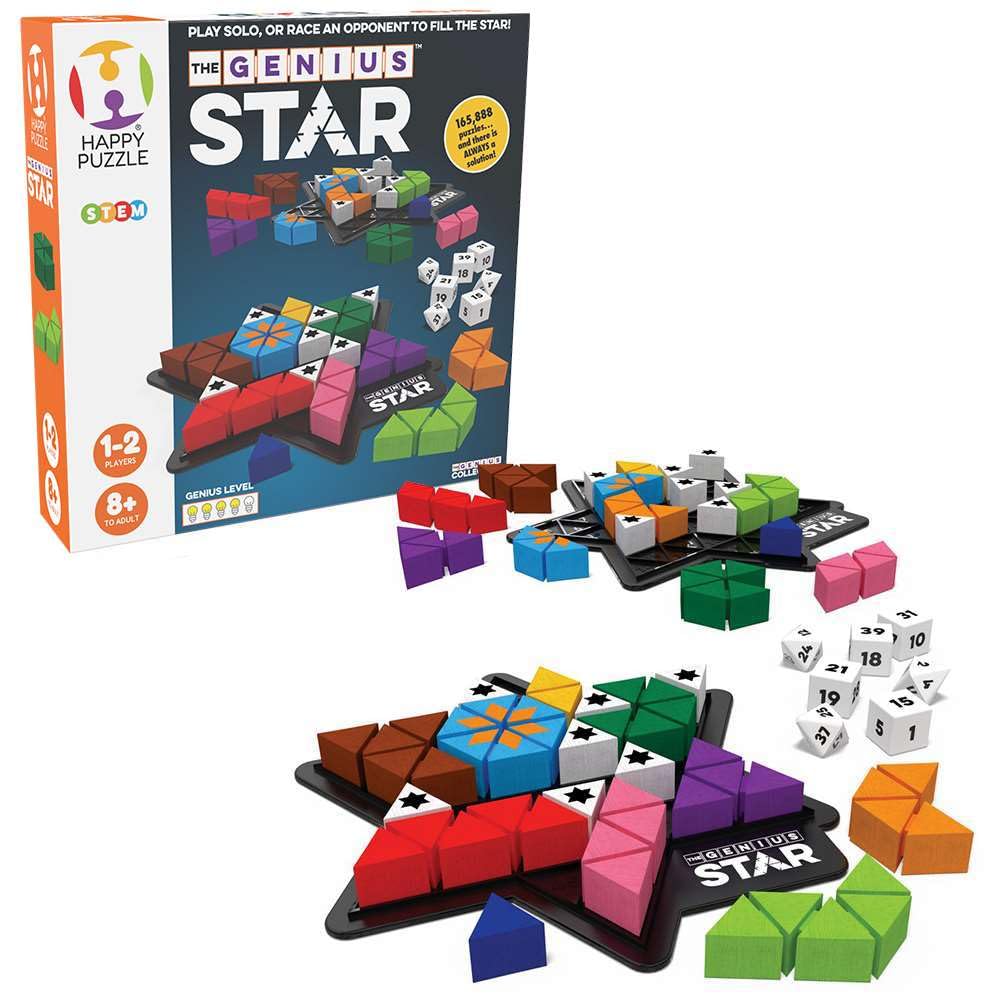
- Presents 165,888 possible puzzles.
- Supports solo play and head-to-head play for two.
- Includes two game boards, twenty-six pieces, and seven dice.
Best For: Players ages eight and up who want solo logic practice or a quick head-to-head puzzle challenge.
Rich Dad CASHFLOW Board Game
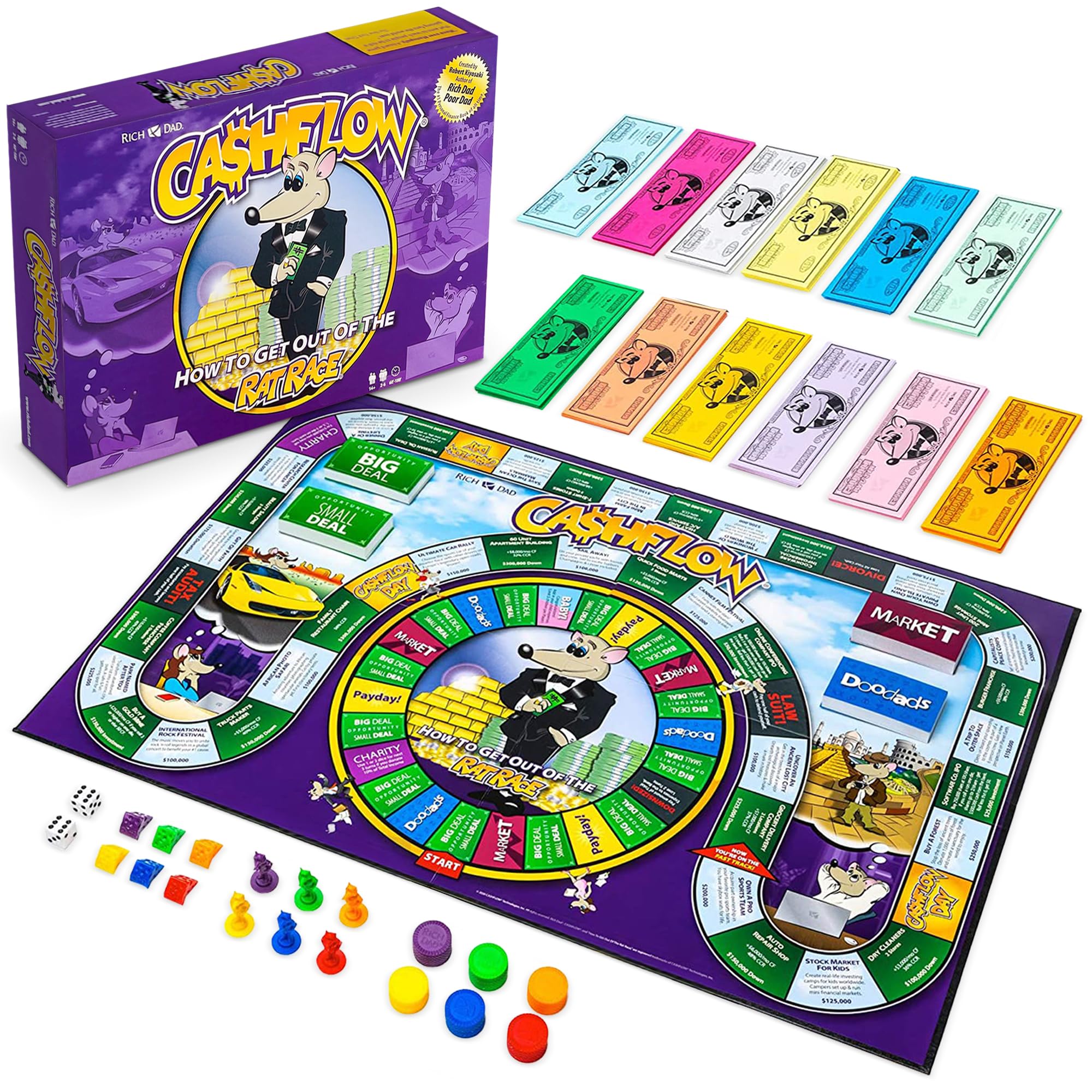
- Explores stock investing, real estate investing, and business building.
- Supports a six-player learning game for ages fourteen and up.
- Requires only basic math skills to begin.
Best For: Ages fourteen and up exploring investing, saving, and business concepts with up to six players.
Early Math Practice
Learning Resources Sum Swamp Game Addition & Subtraction Board Game - Educational Homeschool, Elementary Math Classroom Must Haves, Kindergarten, Gifts for Kids, Numbers for Boys and Girls
Sum Swamp turns early arithmetic into a path through a themed game board. It covers addition, subtraction, and even and odd numbers, giving young players practice with several related concepts in one activity.
The fast-paced format is intended to keep sessions engaging, and the sturdy board and colorful creature pieces suit enthusiastic play. It fits classroom centers, homeschool, or family game time when the learning goal is clear and age appropriate.
The supplied details do not give a player count or session length, so check those practical fit details before planning a group activity.
Best For: Kindergarten and first-grade players practicing addition, subtraction, and number concepts through play.
| Pros | Cons |
|---|---|
|
|
Choose Sum Swamp when arithmetic practice is the main goal and players are working on foundational number skills. Its coverage of addition, subtraction, and odd and even numbers makes it more math focused than the matching and fine motor games here.
Before using it with a class or larger family group, check the intended player count and expected play time, since those details are not specified.
Preschool Color Matching
Educational Insights The Sneaky, Snacky Squirrel Game - Toddler Board Games for 3 Year Olds, Fine Motor Skills Toys for Toddlers, Color Matching Preschool Games, Tweezer Tool Fine Motor Game
The Sneaky, Snacky Squirrel Game gives preschoolers a concrete task: spin, find a matching acorn, and use the squirrel squeezer to pick it up. That pairing of color matching and tool use makes it a fit for young players building dexterity alongside turn taking and early strategy.
It supports two to four players from age three, and the tree shaped board doubles as the box to simplify setup and cleanup. The play pattern includes windstorms and opponents who may snatch acorns, adding a little uncertainty to each turn.
Best For: Preschoolers ready to practice color matching, turn taking, and fine motor control in a simple group game.
| Pros | Cons |
|---|---|
|
|
Pick this for a preschool group that will benefit from a simple, tactile turn taking game. It offers more tool-based fine motor practice than Sum Swamp or Raccoon Rumpus, while its color matching is straightforward.
Confirm that the youngest players can safely and comfortably use the small acorns and squeezer, and consider whether the playful take-away mechanic suits the group.
Counting With Fine Motor Play
Educational Insights Shelby's Snack Shack - Toddler Board Games for Kids 4-6, Preschool Fine Motor Skills Toys for Toddlers, Turn Taking Kids Games, Early Math Learning Game, Counting Skill Game
Shelby’s Snack Shack turns counting into a hands-on collection game. Players spin for a bone, use the Shelby Squeezer to gather the corresponding number, and compare bowls at the end.
The set includes 40 bones, four bowls, a double spinner, and a game board that also serves as its box for storage. It accommodates two to four players, making it a practical fit for a small classroom group or family game.
Its focus is early numbers and fine motor skills, rather than broader arithmetic or extended strategy.
Best For: Preschool players practicing counting and number recognition with a tactile collection game.
| Pros | Cons |
|---|---|
|
|
This is a useful fit when young players need tactile counting practice and you want a small group activity. It shares preschool appeal with Sneaky, Snacky Squirrel, but centers on counting quantities rather than color matching and acorn collection.
Check whether its play level fits the children in your group; although its title suggests ages four to six, the supplied play details do not state a minimum age or duration.
Two Modes of Matching
Educational Insights Raccoon Rumpus - Color Matching Game for Kids, 2-in-1 Memory Matching Games for Toddlers 3-5, Skill-Building Preschool Games, Early Learning Color Board Game, Boys & Girls Ages 3+
Raccoon Rumpus offers two related ways to play: match costume cards to a raccoon using jumbo color and costume dice, or switch to a costume memory game. Players collect costumes, with the first to five winning the matching mode.
The different modes offer a little variety while keeping the core activity centered on color recognition and matching. Its four raccoon cards, twenty costume cards, and oversized dice suit early learners at home or in a classroom.
It is designed for children ages three and up.
Best For: Preschoolers who enjoy color matching and want both a quick matching game and a memory variation.
| Pros | Cons |
|---|---|
|
|
Choose Raccoon Rumpus when color matching is the priority and a memory variant would help keep repeat sessions fresh. Compared with Sneaky, Snacky Squirrel, it uses dice and cards rather than a squeezer and loose acorns, so it may be the better fit for groups that prefer card-based play.
Check the player count and time required before using it as a scheduled classroom station.
Pattern Recognition for Preschool
hand2mind Numberblocks Race to Pattern Palace! Board Game, Educational Board Games, Numbers for Toddlers, Math Toys for Kids 3-5, Preschool Learning Activities, Birthday Gifts for Kids
Race to Pattern Palace puts pattern practice at the center of a board game for preschoolers. Players move Numberblocks One to Four and use colored tiles to copy, extend, and create patterns shown on cards.
The two levels include an introductory deck and a more advanced challenge deck, letting a group choose a suitable starting point. For two to four players, the set includes pawns, bridges, tiles, cards, and a dice popper.
This is a strong classroom activity when the goal is early pattern recognition rather than general counting alone.
Best For: Numberblocks fans practicing patterns, colors, and counting with two levels of play.
| Pros | Cons |
|---|---|
|
|
Pick this for preschool groups who are ready to spot and build patterns, especially if Numberblocks is already familiar to them. The two card levels give more control over difficulty than a single-mode matching activity.
Check whether the class has room to set out the board, bridges, and tiles, and confirm storage arrangements; the supplied details do not include the game’s dimensions or session length.
Hands-On Sorting and Counting Game
Learning Resources Noodle Knockout Fine Motor Game - Games for Kids Ages 4-8, Toddler Board Game, Educational Matching Kids Games, Preschool and Kindergarten Classroom Game, Gifts for Toddlers
Noodle Knockout combines a playful food theme with hands-on sorting and grabbing. Children use chopsticks to pick up soft noodles and toppings, while the game supports counting, color recognition, sorting, and turn taking.
Three game variations allow different ways to play, and the set supports two to four players ages four and up. Its 67 pieces include noodles, toppings, a spinner, order cards, bowls, and chopsticks.
Its focus on early skills and fine motor play makes it suitable for home, school, or group play.
Best For: Small groups of children ages four and up practicing color recognition, counting, and fine motor skills.
| Pros | Cons |
|---|---|
|
|
This is the most component-heavy classroom activity in the group, so choose it when tactile play and several game variations matter more than quick setup. Its two to four player limit suits a small station rather than a whole-class activity at once.
Before buying, consider whether you have a clear storage routine for the noodles, toppings, cards, and utensils.
Active Preschool Relay
Educational Insights Pancake Pile-Up - Relay Race Games for Kids, Gross Motor Preschool Games for 4 Year Olds, Birthday Party Activities, Matching and Patterning Toddler Game
Pancake Pile-Up brings movement into a preschool game session. Players flip an order card, race to find the matching pancake, place it with a spatula, and pass the utensil to the next teammate.
The game builds matching, patterning, sequencing, hand-eye coordination, and balance through a relay format. It supports two to twelve players ages four and up, so it can accommodate a larger group than many tabletop learning games.
The set includes pancakes, butter, plates, spatulas, order cards, and a griddle board that doubles as packaging.
Best For: Children ages four and up who can play an active team relay while practicing matching and sequencing.
| Pros | Cons |
|---|---|
|
|
Choose Pancake Pile-Up when a classroom or party group needs to move, rather than sit around one board. Its player range is broader than the small-group preschool games, and teammates hand off the spatula as they build a stack.
Plan enough clear space for the relay route and confirm that the group is comfortable with competitive racing before using it.
Head-to-Head Logic Challenge
Educational Insights Kanoodle Head-to-Head
Kanoodle Head-to-Head turns a puzzle into a direct race for two players. Each person arranges their pieces to solve a challenge, with forty double-sided cards providing eighty puzzles.
The two-sided puzzle board and included lid create a contained setup, while the eight pieces per player make the activity easy to divide. It is designed for ages seven and up and offers screen-free play focused on critical thinking and problem solving.
This is a focused two-player choice, not a broad classroom group game, so it works best at a small station or as a paired activity.
Best For: Two players ages seven and up who enjoy racing through spatial logic puzzles.
| Pros | Cons |
|---|---|
|
|
Select Kanoodle Head-to-Head for paired learners who like spatial puzzles and a competitive timer-free race format. Its puzzle focus contrasts with the early learning games, and the eighty puzzles offer many challenges in a compact activity.
Because it is specifically for two players, plan it as a pair station and have another activity ready for a larger group.
Solo or Two-Player Puzzle
The Happy Puzzle Company The Genius Star | Toy of The Year Award Winning Family Board Game | 165,888 Possible Puzzles | Filling in Colored Shapes | Blockers to Complete A Star | Golden Star Twist
The Genius Star uses a star-shaped board and Tetris-style pieces to create logic challenges for solo players or pairs. A dice roll determines blockers, after which players fit colored shapes into the remaining spaces.
The title and notes give 165,888 possible puzzles, and the game supports solo play or a head-to-head race for two. Its two boards, twenty-six pieces, and seven dice make it suitable for home, family learning, or a classroom logic station.
The focus is spatial reasoning and problem solving, so it suits players who enjoy puzzles more than narrative or team play.
Best For: Players ages eight and up who want solo logic practice or a quick head-to-head puzzle challenge.
| Pros | Cons |
|---|---|
|
|
Choose The Genius Star if you want one puzzle game that can be used solo or for a two-player challenge. It offers a different shape-placement task from Kanoodle Head-to-Head and lists a much larger number of possible puzzle setups.
Check the age fit and whether players enjoy open-ended spatial challenges; it is less suited to younger learners or groups who need a cooperative activity.
Family Finance Learning
Rich Dad CASHFLOW Board Game, Educational Business & Finance Literacy Game, Ages 14 & Up - Financial Learning Games for Kids, Teens, Adults and Family
CASHFLOW uses board-game play to introduce financial concepts, including stock investing, real estate investing, and business building. It is designed as a collaborative family experience for six players and ages fourteen and up, with basic math skills described as sufficient to get started.
This makes it a more specialized pick than general classroom games: it suits older teens and adults interested in finance-focused conversation. The box measures 11 by 3 by 15 inches and weighs 2.3 pounds.
Extra paper is recommended, so plan for that alongside the game materials.
Best For: Ages fourteen and up exploring investing, saving, and business concepts with up to six players.
| Pros | Cons |
|---|---|
|
|
Choose CASHFLOW for older teens or adults looking for a finance-centered game and discussion starter. Its topics are more advanced than the preschool matching and arithmetic games, and its age recommendation makes it unsuitable for younger classrooms.
Confirm that the group wants investing and business themes, and have extra paper available as recommended.
How to Choose Board Games
How We Picked Board Games
We prioritized complete, playable games that offer a clear fit for classroom learning, family play, or a focused logic challenge. The selection spans preschool matching and fine motor activities, early arithmetic and pattern practice, active relay play, puzzles for solo or paired players, and a finance game for older players.
Age range, group size, learning focus, and play format matter more here than a single definition of the best board game. Some options suit a small classroom station, while Pancake Pile-Up supports a larger active group.
We left out replacement pieces, uncertain product identities, and duplicate versions of the same core game.
Comparing Board Games for Classrooms and Families
The preschool choices differ in the skill they emphasize. Sum Swamp focuses on arithmetic, Race to Pattern Palace practices sequences and colors, and the Educational Insights games use matching, counting, memory, or fine motor play.
Noodle Knockout adds three variations and a larger collection of tactile pieces, while Pancake Pile-Up shifts play into a team relay that needs room to move.
For older learners, Kanoodle Head-to-Head and The Genius Star offer spatial problem solving, though Kanoodle is built for two players and The Genius Star also supports solo play. CASHFLOW moves toward financial literacy and conversation for ages fourteen and up.
Match the choice to both the learning goal and the way your group prefers to play.
| Product | Standout features | Best for |
|---|---|---|
| Learning Resources Sum Swamp GameCheck Price |
| Kindergarten and first-grade players practicing addition, subtraction, and number concepts through play. |
| Educational Insights The Sneaky, Snacky Squirrel GameCheck Price |
| Preschoolers ready to practice color matching, turn taking, and fine motor control in a simple group game. |
| Educational Insights Shelby’s Snack ShackCheck Price |
| Preschool players practicing counting and number recognition with a tactile collection game. |
| Educational Insights Raccoon RumpusCheck Price |
| Preschoolers who enjoy color matching and want both a quick matching game and a memory variation. |
| hand2mind Numberblocks Race to Pattern Palace!Check Price |
| Numberblocks fans practicing patterns, colors, and counting with two levels of play. |
| Learning Resources Noodle KnockoutCheck Price |
| Small groups of children ages four and up practicing color recognition, counting, and fine motor skills. |
| Educational Insights Pancake Pile-UpCheck Price |
| Children ages four and up who can play an active team relay while practicing matching and sequencing. |
| Educational Insights Kanoodle Head-to-HeadCheck Price |
| Two players ages seven and up who enjoy racing through spatial logic puzzles. |
| The Happy Puzzle Company The Genius StarCheck Price |
| Players ages eight and up who want solo logic practice or a quick head-to-head puzzle challenge. |
| Rich Dad CASHFLOW Board GameCheck Price |
| Ages fourteen and up exploring investing, saving, and business concepts with up to six players. |
Choosing Educational Board Games by Age and Group Size
Check the recommended age against the youngest player, then look at how many people can participate at once. Several preschool games support two to four players, which works for a small group or rotating classroom center.
Pancake Pile-Up supports a broader group, but its relay requires enough clear floor space and a willingness to play actively.
For one student working independently, The Genius Star offers solo puzzle play. Kanoodle Head-to-Head is specifically for pairs, so it works well for partner stations.
CASHFLOW is aimed at older teens and adults, while Sum Swamp and the preschool games have early learning goals.
Classroom Setup, Pieces, and Storage
Component count affects setup and cleanup. Noodle Knockout includes a 67-piece set, and Race to Pattern Palace uses cards, tiles, bridges, and pawns.
Those materials create hands-on activities, but they need a storage routine. The Sneaky, Snacky Squirrel and Shelby’s Snack Shack boards double as boxes, which can simplify putting those games away.
Pancake Pile-Up includes larger play props and a griddle board that doubles as packaging. It is worth planning how pieces will move between tables and the relay area.
For every classroom board game, confirm that you have the needed table or floor space and a way to keep small parts with their game.
Which Board Game Fits Your Group?
For early arithmetic, choose Sum Swamp; for patterns, choose Race to Pattern Palace. For color matching and preschool fine motor play, compare Sneaky, Snacky Squirrel, Shelby’s Snack Shack, and Raccoon Rumpus by the task and pieces that best suit your learners.
Noodle Knockout fits groups that want varied tactile play, while Pancake Pile-Up is the active option for larger gatherings.
For a quiet logic challenge, consider Kanoodle Head-to-Head for a pair or The Genius Star for solo and paired play. Choose CASHFLOW when older players want to explore finance together.
Checking the group size, age fit, learning goal, and cleanup needs will help narrow the board games to a practical match.