The best educational flash cards make a specific skill easier to practice, from letter sounds and sight words to counting and bilingual vocabulary. Choose a format that fits the learner and setting: self-checking audio, tactile activities, or simple cards for shared practice.
Quick Top Products
Educational Insights Hot Dots Phonics Fun
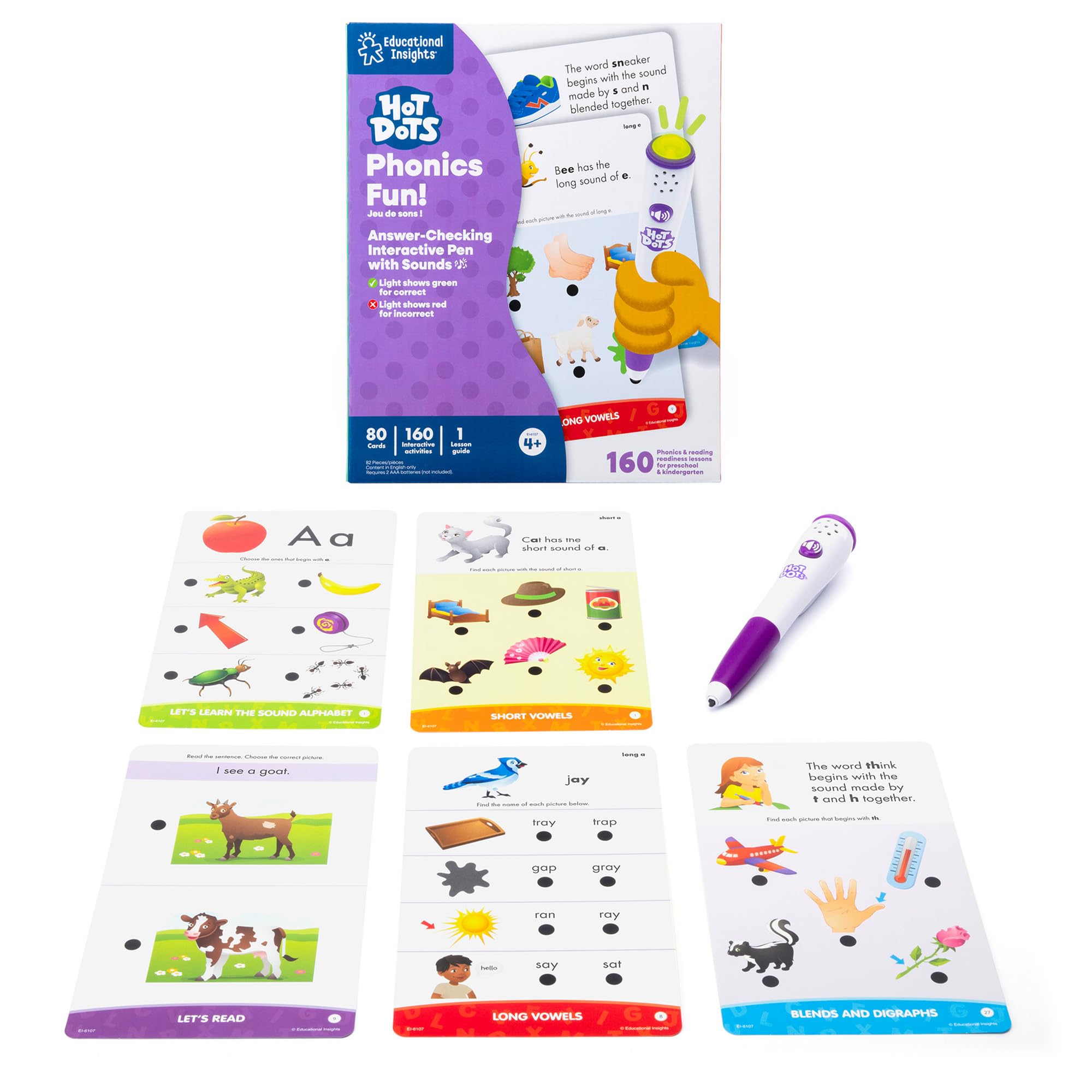
- Includes 80 double-sided cards for 160 activities.
- The pen gives immediate visual and audio answer feedback.
- Covers letter sounds, vowels, blends, digraphs, and sight words.
Best For: Preschool and kindergarten learners practicing phonics and sight words independently.

Educational Insights Hot Dots Numbers & Counting
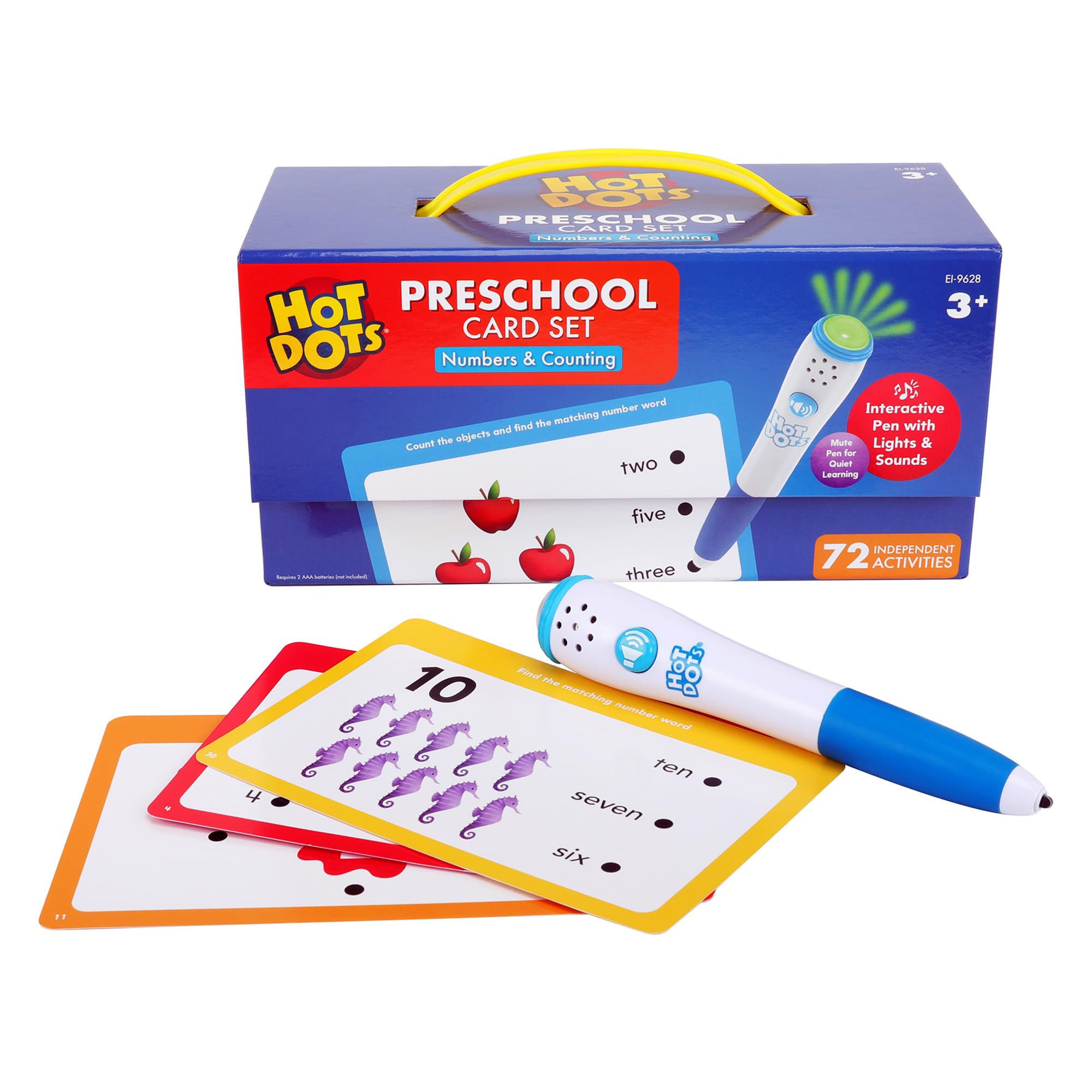
- Includes 36 double-sided number cards and 72 activities.
- The set comes with an interactive pen and handled storage case.
- Practice includes number recognition, number words, counting, and sequencing.
Best For: Preschoolers practicing number recognition, number words, counting, and sequencing.
Learning Resources Sight Word Stomp!
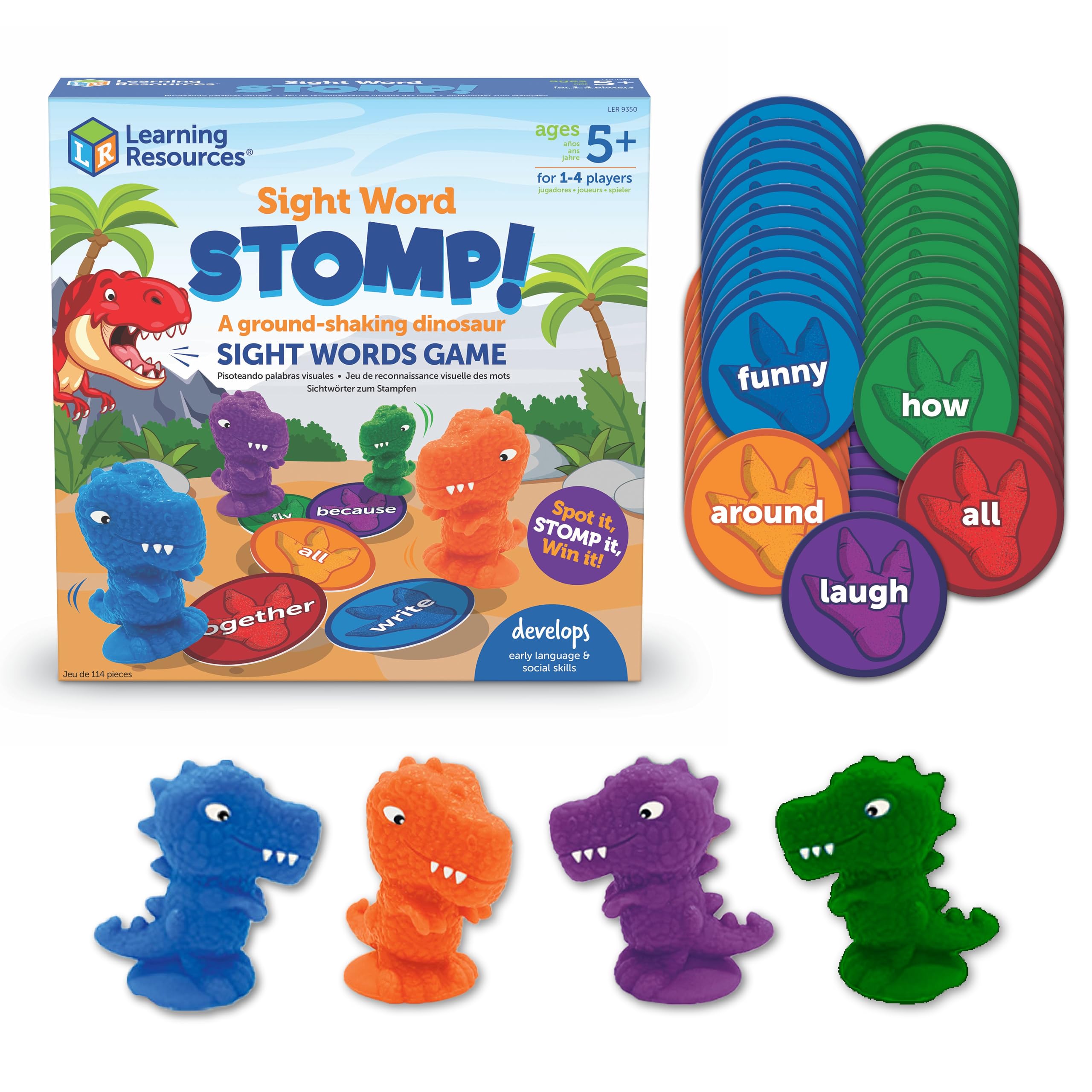
- Includes 110 double-sided cards with 220 sight words.
- Four dinosaur stompers suction to the word cards.
- Words are color-coded from Pre-Primer through Third Grade.
Best For: Children ages 5 and up who learn well through active sight-word games.
Learning Resources Minute Math Electronic Flash Card
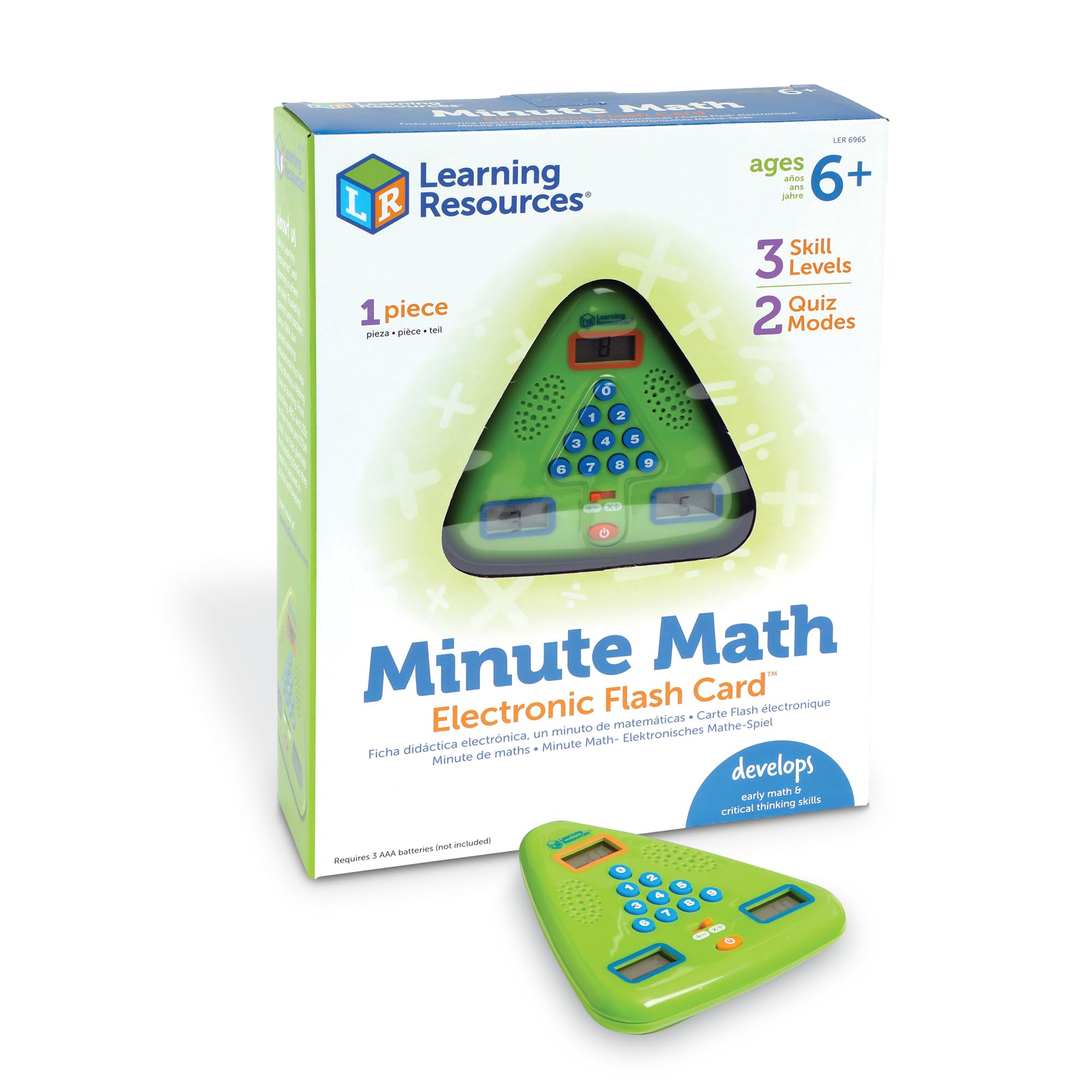
- Practice covers addition, subtraction, multiplication, and division.
- One-minute timed challenges make drills game-like.
- Three progressive levels are designed for a broad school-age range.
Best For: Students practicing addition, subtraction, multiplication, and division with timed or quiet drills.
hand2mind Alphabet Picture Mnemonic Cards
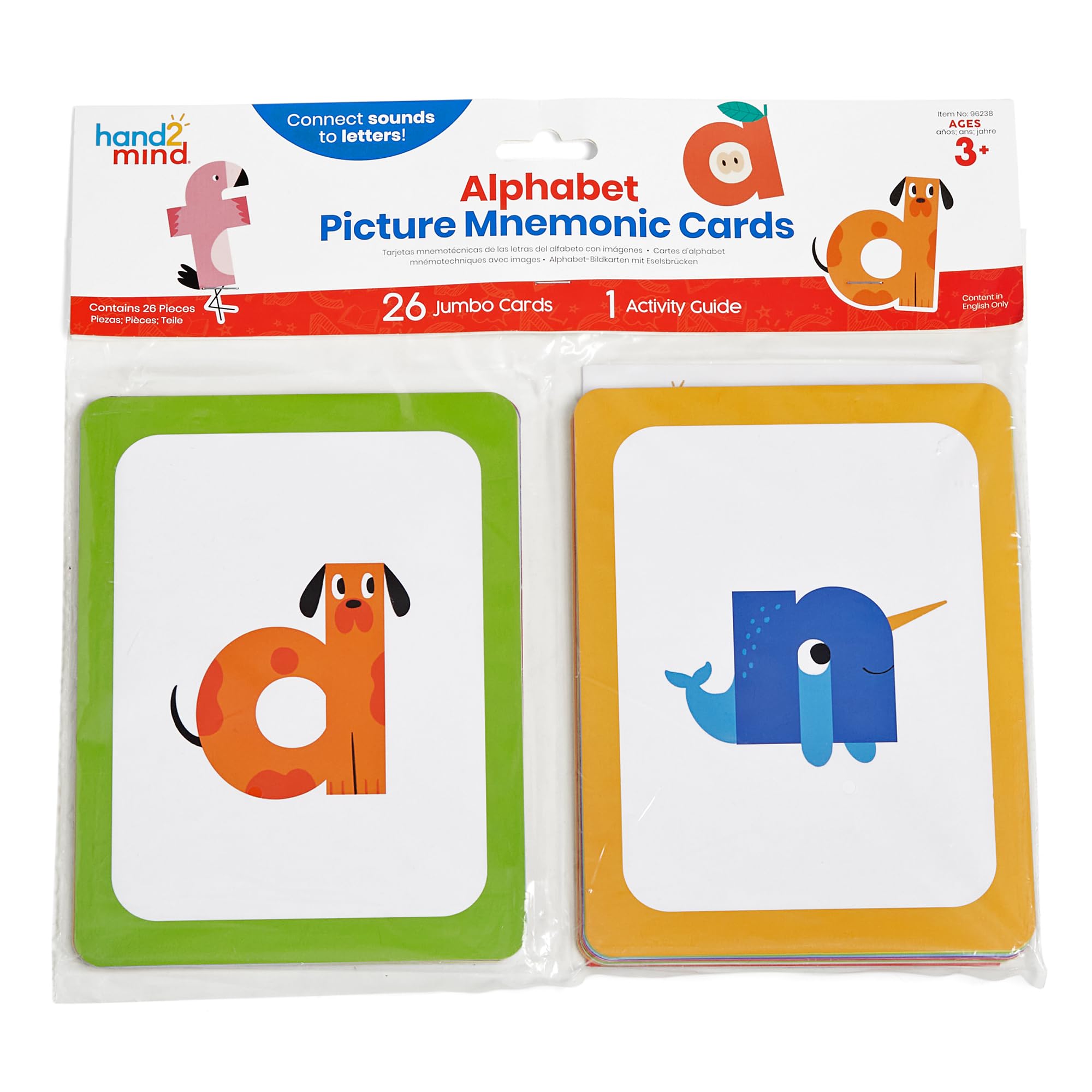
- Includes 26 double-sided embedded picture mnemonic cards and an activity guide.
- Picture cues connect lowercase shapes with letter sounds.
- The cards measure 6 by 8 inches for classroom visibility.
Best For: Young learners working on letter recognition and letter sounds with visual cues.
Mr. Pen Alphabet Flash Cards
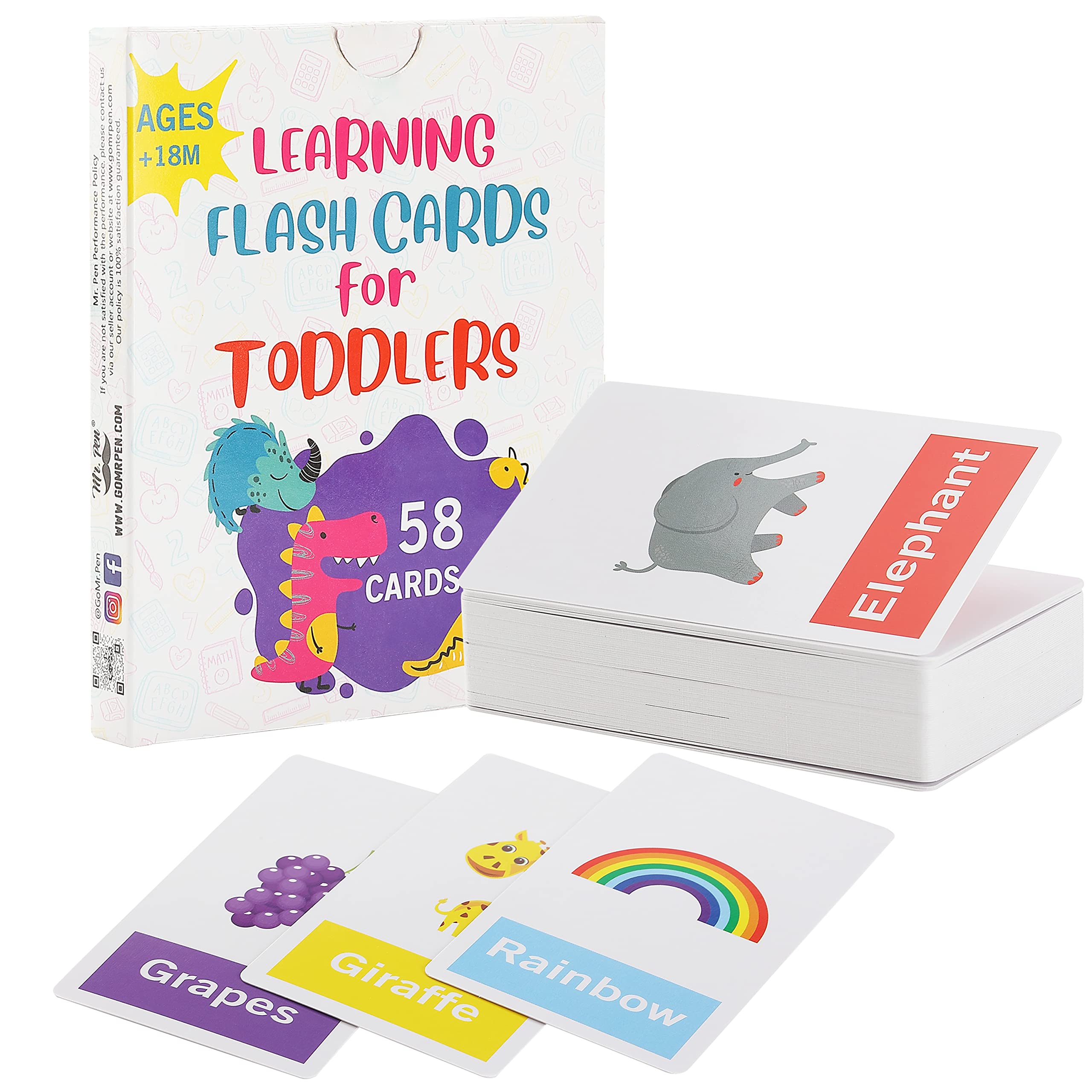
- Includes 58 double-sided picture cards.
- Cards measure 4.2 by 2.5 inches and fit tiny hands.
- Waterproof film makes the cards wipeable.
Best For: Toddlers who need a compact, screen-free alphabet and picture card set.
Learning Resources Word Whiz Electronic Flash Card
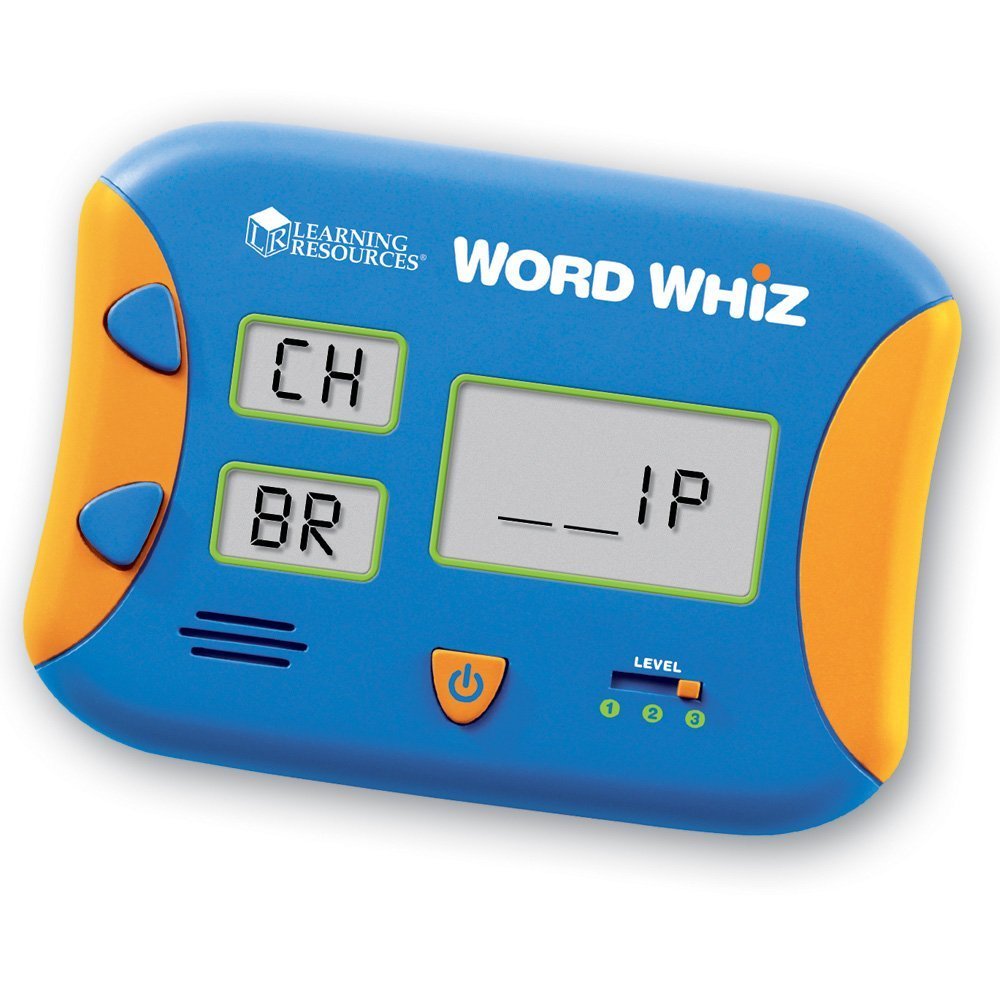
- Challenges players to build three-, four-, and five-letter words in 60 seconds.
- Practice combines beginning letters and blends with word families.
- Three skill levels and volume control are included.
Best For: Children ages 5 and up practicing three-, four-, and five-letter word building.
hand2mind 3D Sound and Phonics Cards
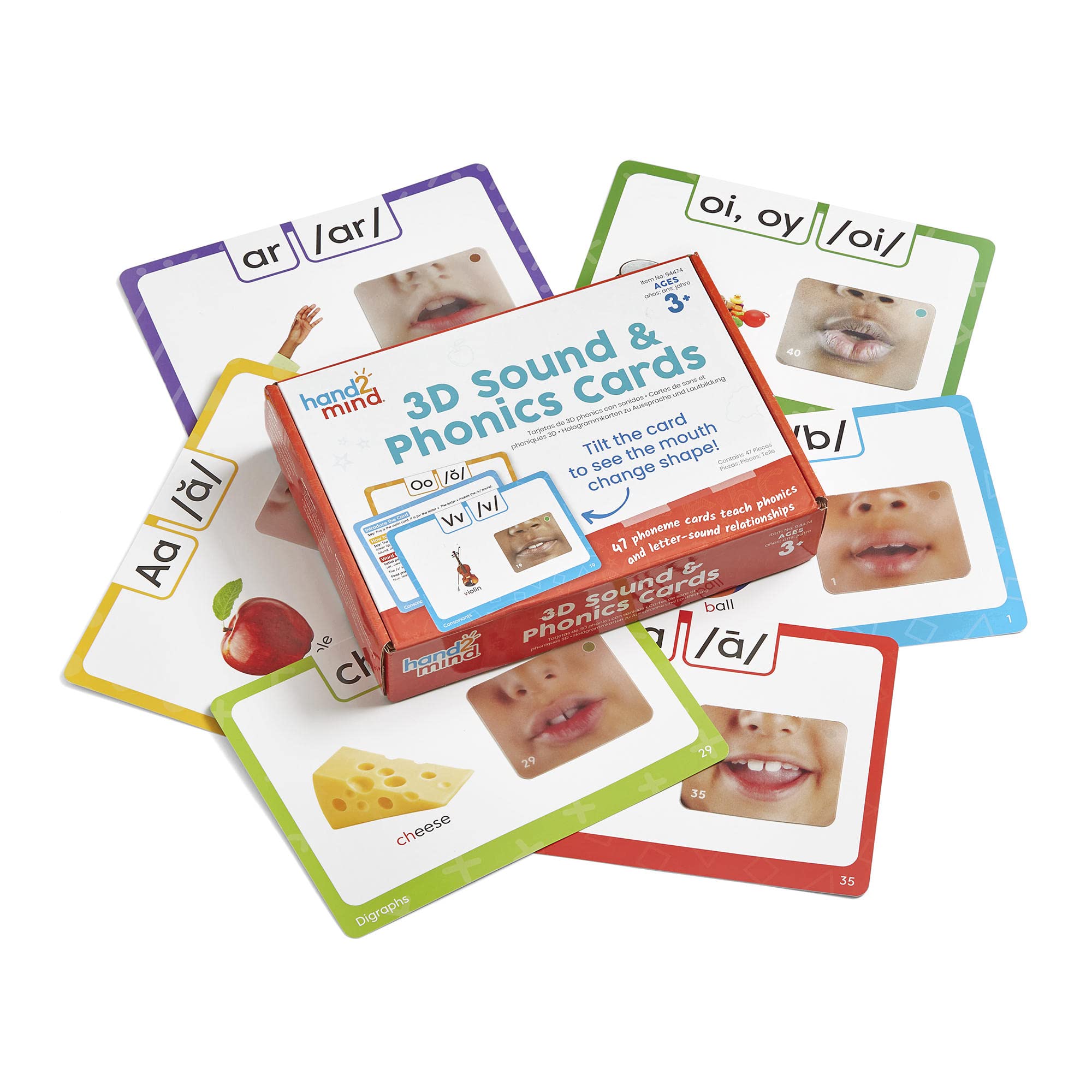
- The set teaches 47 sounds with visual mouth-movement cues.
- Cards include teaching tips and example words.
- The image changes to show tongue, lip, and mouth positions.
Best For: Kindergarten learners practicing how to form and articulate speech sounds.
Spanish & English Talking Flash Cards, 510 Words
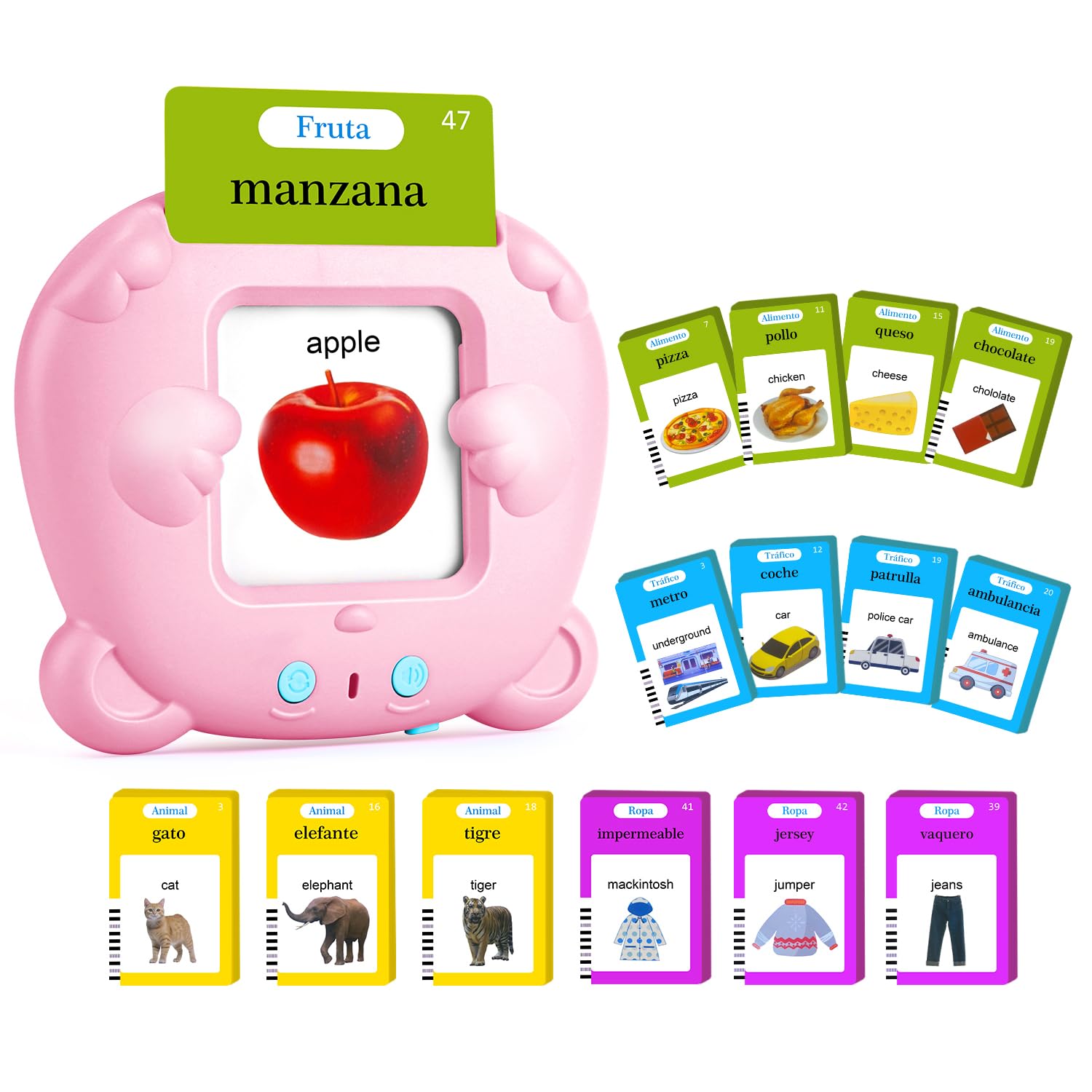
- Includes 255 double-sided cards covering 510 words.
- Topics include animals, transportation, food, and jobs.
- Reader includes three children's songs and three audio modes.
Best For: Preschool learners building Spanish-English vocabulary with spoken prompts and varied topics.
Educational Insights Playfoam Shape & Learn Numbers
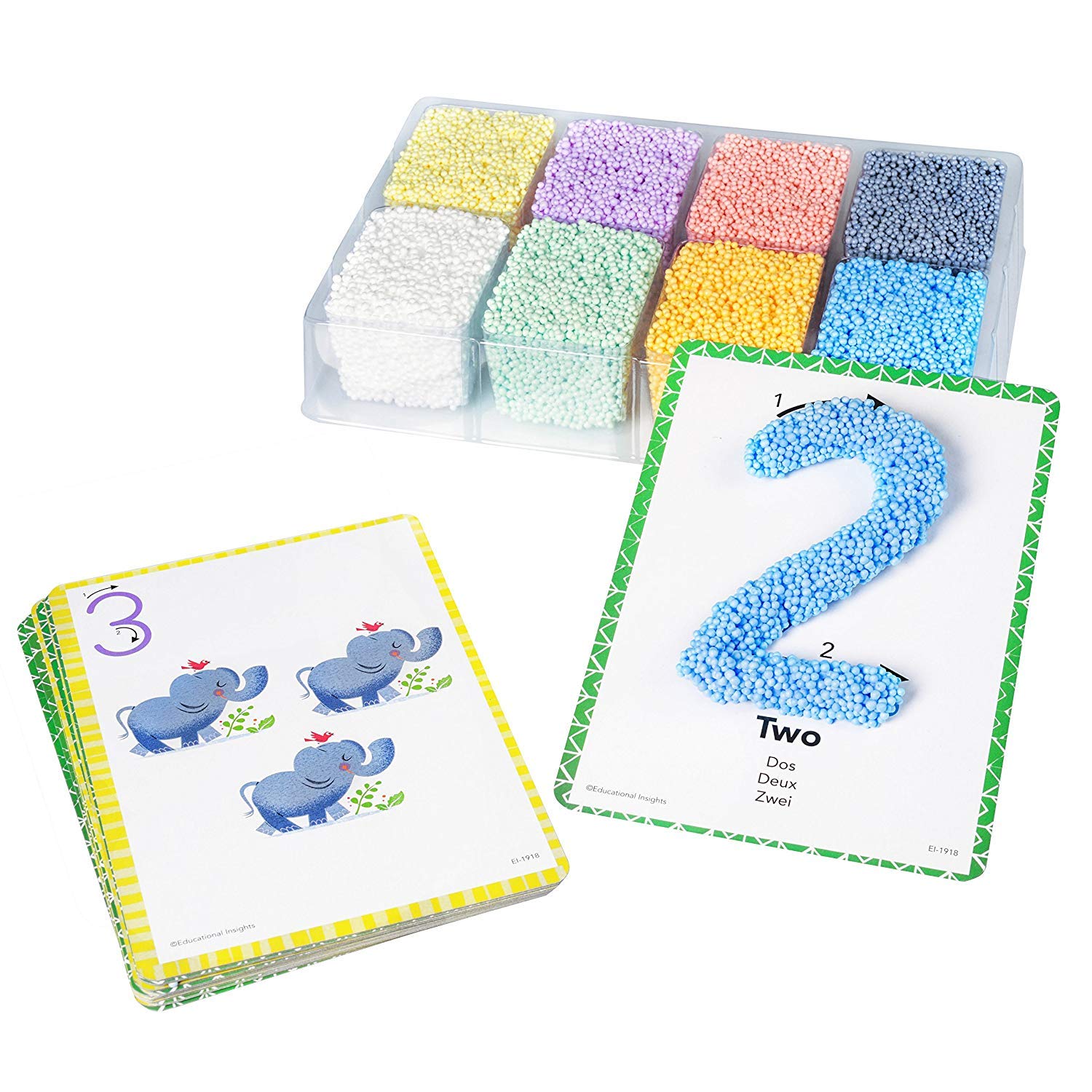
- Includes eight Playfoam bricks and 13 double-sided number cards.
- Children use Playfoam on the cards to practice number formation.
- The activity supports fine motor skills and sensory stimulation.
Best For: Preschoolers practicing number formation with hands-on sensory materials.
Independent Phonics Practice
Educational Insights Hot Dots Phonics Fun Set - Preschool and Kindergarten Flash Cards Compatible with Interactive Pen, Preschool Learning Activities, Learn to Read Activity for Kids Ages 3 and Up
This Hot Dots set pairs 80 double-sided cards with an interactive pen that checks answers with light and sound. Children can work through 160 activities at their own pace, with green feedback for correct responses and red for incorrect ones; the sounds can be muted.
The content covers letter sounds, vowels, blends, digraphs, and sight words, giving it a clear early reading focus. It suits a classroom station or home practice where children benefit from immediate feedback.
The pen needs two AAA batteries, which are not included, so plan for those before using it.
Best For: Preschool and kindergarten learners practicing phonics and sight words independently.
| Pros | Cons |
|---|---|
|
|
Choose this set when early reading practice needs a built-in answer check and a mix of phonics and sight-word activities. Its 80 double-sided cards provide more practice than a small topic deck, while the interactive pen adds a device to manage.
Check whether you have two AAA batteries and whether the audio feedback is appropriate for the learning space; it can be muted.
Self-Checking Number Skills
Educational Insights Hot Dots Numbers & Counting Set - Preschool Learning Activities, Interactive Math Flash Cards for Toddlers 3-5 Years, Kindergarten Classroom Must Haves & Homeschool Essentials
This preschool math set combines 36 double-sided cards with an interactive pen and handled storage case. The 72 activities cover number recognition, number words, counting, and sequencing, with immediate light and sound feedback when a child presses the pen to an answer dot.
Green and red lights distinguish correct and incorrect answers, and the sounds can be muted. That self-checking format can support independent practice or a classroom learning station.
The pen needs two AAA batteries that are not included, so have batteries ready before introducing the activity.
Best For: Preschoolers practicing number recognition, number words, counting, and sequencing.
| Pros | Cons |
|---|---|
|
|
Pick this set for early math work when children can benefit from immediate feedback as they practice several number skills. The storage case makes it convenient to move between home and classroom use.
Its focus is preschool number learning rather than broad academic coverage, so match the activities to the child's current practice goals. Remember to supply two AAA batteries, and consider whether the pen's audio should be muted in a shared room.
Playful Sight-Word Review
Learning Resources Sight Word Stomp! - Alphabet Toys, Phonics Flash Cards, Classroom Board Games, ABC Homeschool, Reading Manipulatives, Gifts for Boys and Girls, Visual Vocabulary
Sight Word Stomp! turns word review into a physical matching game with 110 double-sided cards and four colorful dinosaur stompers. The cards contain 220 sight words color-coded by difficulty from Pre-Primer through Third Grade, giving families and teachers a way to choose words across several reading levels.
Children use the stompers, which suction to the word cards, as part of the play. This format suits group games, homeschool sessions, or learning centers where movement can add variety to practice.
It is a game-based option rather than a self-checking electronic set, so an adult or another player can guide the activity.
Best For: Children ages 5 and up who learn well through active sight-word games.
| Pros | Cons |
|---|---|
|
|
Choose this game for a child who may welcome movement and turn-taking during sight-word practice. Its 220 words span several difficulty levels, so adults can adapt play as reading skills develop.
It works best when someone can organize the game and help select an appropriate card level. Check how the pieces will be stored between sessions, since the supplied details do not specify a storage container.
Four-Operation Math Drills
Learning Resources Minute Math Electronic Flash Card - Classroom Must Haves, Homeschool Supplies, Math Manipulatives, Multiplication Chart, Educational Toys for Toddlers, Back to School
This handheld electronic flash card covers all four operations and offers one-minute timed challenges for quick math-fact practice. Three progressive skill levels are intended to accommodate learners from first grade through middle school, so it can remain useful as practice advances.
A silent mode is available by holding the level button, which helps the device fit quieter settings such as a classroom or a car ride. It is a compact digital practice tool rather than a deck of printable or paper cards.
The supplied details do not identify its power source, so check that before purchase.
Best For: Students practicing addition, subtraction, multiplication, and division with timed or quiet drills.
| Pros | Cons |
|---|---|
|
|
Consider this device when a learner needs repeated practice across several math operations and finds timed challenges motivating. Its three levels offer a wider progression than a single-skill multiplication drill, while silent mode is useful where sound would distract others.
It depends on an electronic device rather than a reusable paper deck. Before buying, confirm the power requirements and whether the student benefits from timed practice.
Large-Format Alphabet Mnemonics
hand2mind Alphabet Picture Mnemonic Cards, ABC Flashcards for Kids, Classroom Alphabet Cards, Early Learning Flash Cards, Letter Recognition, Montessori Alphabet Cards, Toddler Learning Activities
These alphabet cards use embedded pictures to connect lowercase letter shapes with familiar images and the sounds they represent. Each card flips to uppercase and lowercase practice with a small visual cue, making the set useful for phonics work as well as letter recognition.
The 26 double-sided cards are jumbo 6 by 8 inch cards, which are easier to use in classroom displays or small-group demonstrations than pocket-sized cards. An activity guide adds ideas for letter recognition, phonics, and word building.
Choose this set when visibility and visual memory cues matter more than a large volume of cards.
Best For: Young learners working on letter recognition and letter sounds with visual cues.
| Pros | Cons |
|---|---|
|
|
This is a good fit for teaching letter forms and sounds with a visual association, particularly when an adult wants cards large enough to show a group. The 26-card scope keeps the activity focused on alphabet foundations rather than broader reading or math skills.
Use the activity guide to extend practice into word building. Check that the jumbo format suits your storage and table space before choosing it for portable use.
Wipe-Clean Toddler Alphabet Deck
Mr. Pen- Alphabet Flash Cards for Toddlers, Double-Sided, 58 Picture Cards | Toddler Flash Cards, Alphabet Flash Cards, Baby Flash Cards, Letter Flash Cards, ABC Flash Cards, Number Flash Cards
This set includes 58 double-sided picture cards for early alphabet learning and related activities such as counting, pattern recognition, colors, and classifying. At 4.2 by 2.5 inches, the cards are sized for small hands and are easy to take along.
The cards are laminated with waterproof films and described as tear-resistant, making them wipeable after spills. This simple, non-digital format suits shared parent-child practice without a reader or batteries.
Its topic coverage is broader than letters alone, but the supplied details do not identify a storage case or a breakdown of the 58 cards by subject.
Best For: Toddlers who need a compact, screen-free alphabet and picture card set.
| Pros | Cons |
|---|---|
|
|
Choose these cards for simple, portable practice with a toddler, especially when wipe-clean handling is useful. The 58 double-sided cards support more than letter naming, but the supplied details do not break down how many cards cover each skill.
This is a shared-use format without electronic answer feedback. Check whether a separate pouch or box is needed to keep the cards together, and confirm the size is suitable for the child.
Timed Word-Building Game
Learning Resources Word Whiz Electronic Flash Card, Letter Games for Kids, Word Recognition, Ages 5+
Word Whiz is a handheld electronic game that challenges children to build as many three-, four-, and five-letter words as possible in 60 seconds. It practices combining beginning letters and blends with word families, giving the activity a word-building focus rather than a broad phonics curriculum.
Three skill levels offer different challenges, while immediate feedback and volume control make it suited to solo or supervised practice. The fast pace may appeal to children who enjoy short timed rounds.
The supplied details do not specify the power source, so confirm how it runs before choosing it.
Best For: Children ages 5 and up practicing three-, four-, and five-letter word building.
| Pros | Cons |
|---|---|
|
|
This device suits children ready to build short words and who like a quick game format. It focuses on combining beginning letters and blends with word families, so it can complement rather than replace broad letter-sound practice.
Volume control helps adapt use to home or classroom settings. The 60-second challenge is central to the activity; check that timed rounds match the learner's preferences and confirm the power requirements before buying.
Visual Mouth-Movement Phonics
hand2mind 3D Sound and Phonics Cards, Phonemic Awareness, Phonics Flash Cards, Letter Sounds for Kindergarten, Speech Therapy Toys, ESL Teaching Materials, Science of Reading Manipulatives
These phonics cards cover 47 sounds and use a changing 3D image to show mouth movements from the start to the finish of each phoneme. Each card includes teaching tips, guidance on forming the sound, and example words.
That makes the set a specific tool for connecting sound instruction with visible tongue, lip, and mouth positions, rather than a standard sight-word deck. Durable cards are intended for repeated handling in centers and small groups.
They can support classroom or home practice, especially when clear modeling of articulation is part of the lesson.
Best For: Kindergarten learners practicing how to form and articulate speech sounds.
| Pros | Cons |
|---|---|
|
|
Choose these cards when instruction needs to make speech-sound formation visible. The changing image and teaching tips distinguish them from alphabet cards that use only printed letters or pictures.
They are designed for repeated use in groups or at home, though the activity depends on an adult guiding sound practice. Check the set's storage needs and whether its 47-sound scope matches the specific phonics sequence you plan to teach.
Broad Spanish-English Word Set
Spanish & English Talking Flash Cards for Kids, 510 Sight Words Bilingual Flash Cards, ABC & Number Learning Toys, Montessori Toys, Speech Therapy Toys, Children's Sensory Preschool Birthday Gifts
This bilingual set pairs a card reader with 255 double-sided cards covering 510 words across topics such as animals, food, transportation, jobs, and more. The reader speaks words when a card is inserted and includes three children's songs.
Three audio modes are described, including English and Spanish rotation and single-language playback, making it adaptable for different practice sessions. The no-screen reader is compact and rechargeable, with battery life listed up to 4.5 hours.
It suits families or classrooms seeking broad Spanish-English vocabulary exposure, though the card barcode needs to be inserted correctly for the reader to work.
Best For: Preschool learners building Spanish-English vocabulary with spoken prompts and varied topics.
| Pros | Cons |
|---|---|
|
|
This option fits learners who need spoken Spanish-English vocabulary practice across many everyday categories. The 510-word set covers animals, transportation, food, fruits, vegetables, people, and jobs.
Its battery-powered reader adds a device and card-insertion step. Confirm that the audio modes match how you want to practice and show children how to orient each card's barcode.
The supplied notes do not identify a specific recommended age range.
Tactile Number Formation
Educational Insights Playfoam Shape & Learn Numbers Set, Flash Card Set, Preschool Kindergarten Classroom Essentials, Ages 3+
This activity pairs double-sided number cards with colorful Playfoam. Children place the foam on a card to practice number formation, adding a tactile step to early numeracy work.
The foam also provides sensory stimulation and helps develop fine motor skills, making the set suited to hands-on number practice. The Playfoam is non-toxic and never dries out.
The cards are double-sided and feature fun illustrations.
Best For: Preschoolers practicing number formation with hands-on sensory materials.
| Pros | Cons |
|---|---|
|
|
Pick this set when children benefit from forming numbers with their hands instead of only looking at a printed prompt. The tactile activity also works fine-motor practice into early numeracy.
It includes fewer cards than broader flash-card sets and focuses on number formation, so it is best as one part of a preschool learning station. Check which numbers are covered, since that range is not identified in the supplied details, and plan a place to store the foam and cards.
How to Choose Educational Flash Cards
How We Picked Educational Flash Cards
This selection prioritizes products that use cards or card-based prompts to practice a defined learning skill. It includes alphabet and phonics sets, sight-word review, early math activities, a tactile number option, and a spoken bilingual vocabulary set.
We favored different formats and classroom or home uses while avoiding repeated offers of the same talking-reader model in multiple language variants.
The range matters as much as the subject. Some options use simple wipeable cards for shared practice; others add a pen, electronic reader, game pieces, or large visual cues.
Consider the learner's age and the adult support available, since self-checking feedback, timed rounds, and guided sound work call for different levels of participation.
Comparing Educational Flash Cards by Format
For direct reading practice, Hot Dots Phonics Fun uses a pen to check answers across phonics and sight words, while Sight Word Stomp! turns a larger sight-word set into an active game. hand2mind's alphabet mnemonics focus on letter-sound associations with large picture cues; its 3D phonics cards instead show how the mouth forms speech sounds.
Math choices also serve different goals. Hot Dots Numbers & Counting supports number concepts with self-checking prompts, the Minute Math device covers four operations with timed challenges, and Playfoam Shape & Learn Numbers focuses on tactile number formation.
A bilingual talking set adds spoken vocabulary practice, with more words and topics than the focused paper-card formats.
| Product | Standout features | Best for |
|---|---|---|
| Educational Insights Hot Dots Phonics FunCheck Price |
| Preschool and kindergarten learners practicing phonics and sight words independently. |
| Educational Insights Hot Dots Numbers & CountingCheck Price |
| Preschoolers practicing number recognition, number words, counting, and sequencing. |
| Learning Resources Sight Word Stomp!Check Price |
| Children ages 5 and up who learn well through active sight-word games. |
| Learning Resources Minute Math Electronic Flash CardCheck Price |
| Students practicing addition, subtraction, multiplication, and division with timed or quiet drills. |
| hand2mind Alphabet Picture Mnemonic CardsCheck Price |
| Young learners working on letter recognition and letter sounds with visual cues. |
| Mr. Pen Alphabet Flash CardsCheck Price |
| Toddlers who need a compact, screen-free alphabet and picture card set. |
| Learning Resources Word Whiz Electronic Flash CardCheck Price |
| Children ages 5 and up practicing three-, four-, and five-letter word building. |
| hand2mind 3D Sound and Phonics CardsCheck Price |
| Kindergarten learners practicing how to form and articulate speech sounds. |
| Spanish & English Talking Flash Cards, 510 WordsCheck Price |
| Preschool learners building Spanish-English vocabulary with spoken prompts and varied topics. |
| Educational Insights Playfoam Shape & Learn NumbersCheck Price |
| Preschoolers practicing number formation with hands-on sensory materials. |
Choosing Cards for Reading and Language Practice
For beginning readers, match the content to the next skill: letter recognition, sound-letter associations, phonics patterns, or sight-word recall. Jumbo alphabet cards are easier to show a small group, while compact laminated cards are convenient for toddler handling and wipe-clean use.
A changing mouth image can help an adult demonstrate articulation, but it does not replace guided practice.
Talking flash cards suit families who want a reader to pronounce vocabulary aloud in two languages. Check which languages are included and how the modes work.
The 510-word Spanish-English set covers many topics and has songs; the reader requires correct card orientation, so consider whether a young learner can manage that step independently.
Picking Math Flash Cards for Home or Classroom
For number recognition, counting, and sequencing, the Hot Dots number set offers activities with answer feedback and a storage case. For broader arithmetic recall, Minute Math practices addition, subtraction, multiplication, and division, with one-minute challenges and a silent mode.
The Multiplication Master candidate is another focused practice tool, but it was excluded because it overlaps with that broader arithmetic option.
If the goal is to form numerals rather than recall answers, Playfoam makes the activity tactile. Check the card content and the learner's current skills before choosing a specialized set.
Also consider whether an electronic pen or reader needs batteries or charging, and whether sound should be muted in a group setting.
Who Should Buy Which Educational Flash Cards?
Choose Hot Dots Phonics Fun for guided phonics and sight-word self-checking, or Sight Word Stomp! for energetic review through a group game. Pick the hand2mind mnemonic cards for large, visually cued alphabet lessons and the 3D cards for explicit sound-formation practice.
Mr. Pen's compact wipeable deck is a straightforward choice for shared toddler learning.
For early math, Hot Dots Numbers & Counting suits self-paced concept practice; Minute Math fits learners who want varied arithmetic drills; Playfoam is for hands-on numeral formation. Choose the Spanish-English talking set when spoken bilingual vocabulary across multiple topics is the main aim.
Match the tool to the specific skill and how the learner prefers to practice.